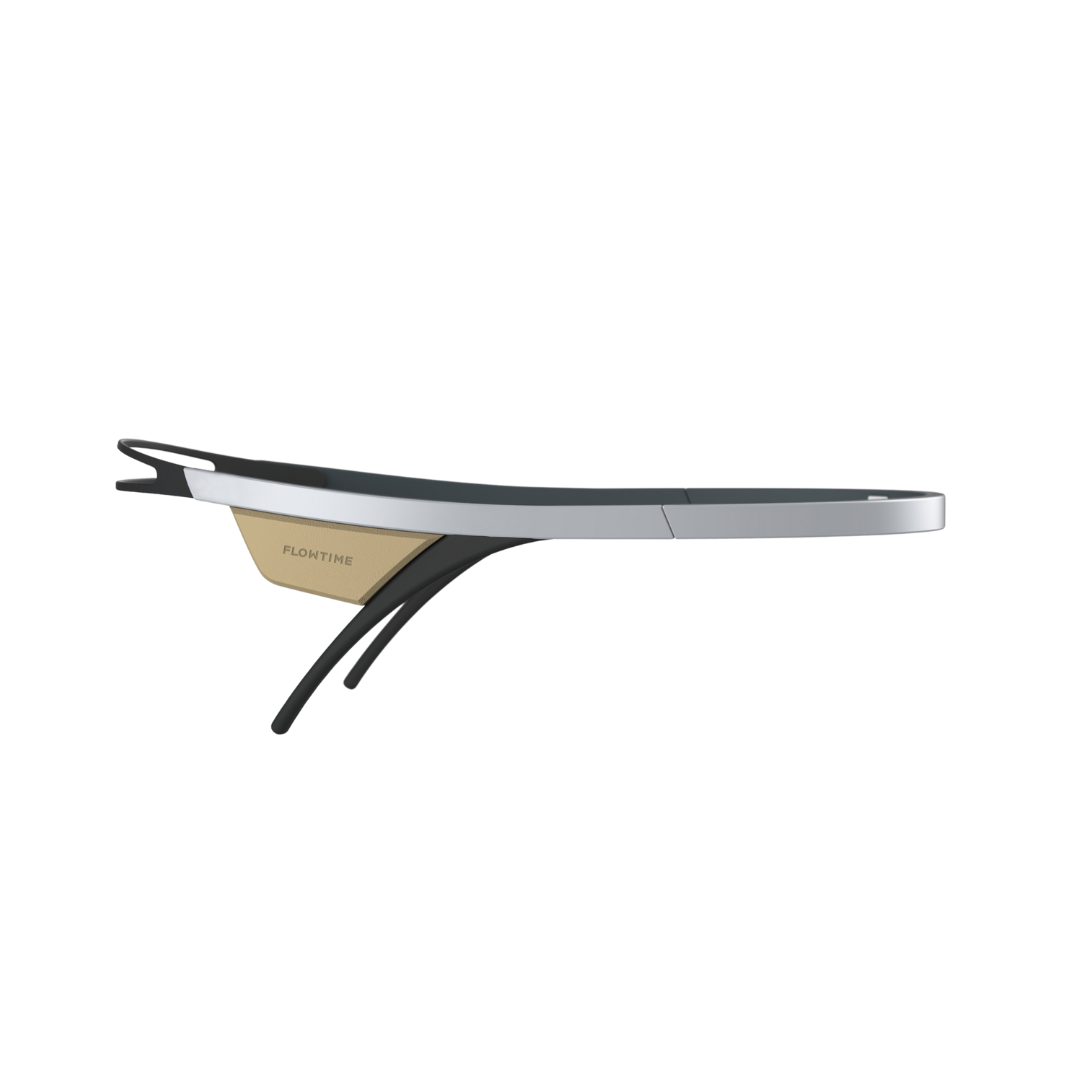
Our review team examined the Flowtime Biosensing Meditation Headband, a wearable built to turn meditation and breathwork from a purely subjective practice into something backed by real-time biometric data.
What Stands Out About Flowtime
What stands out about Flowtime is how directly it ties breathing technique to measurable outcomes. The companion app guides users through different inhale/exhale patterns depending on the goal — a longer exhale than inhale for calm, a longer inhale than exhale for energy, or matched 5-second inhale/exhale cycles to build heart rate variability (HRV). Rather than asking users to trust that a breathing pattern works, Flowtime shows the biodata shift as it happens.
What the Sensors Track
The headband captures a range of biometrics tied to brainwave activity and heart data, giving each session a detailed report afterward. Users can choose a specific biofeedback goal — anything from beginner-friendly presets like "Flow" or "Coherence" to advanced custom metrics like targeting alpha waves above a specific percentage. For anyone interested in the neuroscience side of meditation, the app breaks down activity across all five brainwave rhythms (alpha, beta, theta, delta, gamma), letting more experienced users track things like gamma surges during energized states or theta dominance during deep flow.
Flexible Practice Modes
Flowtime isn't locked into its own guided content. A free Timer Mode lets users play audio from Apple Music, Spotify, Calm, Headspace, or any other source while Flowtime measures body and brain performance in the background using audio cues layered over the biodata trends. That flexibility means people who already have a preferred meditation app or podcast don't have to abandon it to get the tracking benefits.
For those who want more structure, the Premium tier of the app adds guided lessons and nature soundscapes designed to expand over time, plus a live data-casting feature: anyone with a shared link can view a session's biodata in a browser in real time, which the brand positions as useful for teachers guiding students remotely or presenters casting a dashboard to a big screen for a group session.
Build and Everyday Practicality
On the hardware side, the headband itself weighs just 33g and ships with three sizes of rubber bands plus a magnetic charging cable, with a rated battery life of 8 hours of continuous use over Bluetooth 4.0. It pairs with Android 6.0 and iOS 11.2 or later, and a recent app update added offline functionality for Timer Mode and Breathing Training, meaning sessions in internet-free zones now sync automatically once the device reconnects — a practical fix for anyone who meditates somewhere with unreliable signal.
Who It's For
Flowtime's stated audience includes meditation teachers, brain-training coaches, hypnosis practitioners, and self-quantifying "life hackers" who want objective feedback rather than guesswork. Reviewers cited in the brand's own materials describe using it to explore flow-state biomarkers (a mix of brainwave balance, heart rate, HRV, and attention/relaxation scores) and to get concrete data points where music-only meditation left them uncertain about their progress.
Editor's Take
Editor's take: what separates Flowtime from a simple meditation timer is the closed loop between technique and measurement — adjusting a breathing pattern and immediately seeing how HRV or brainwave balance responds. Whether it's worth the investment depends on how much a given user values quantified feedback over intuition-based practice; for data-driven meditators, coaches, or anyone building a home biofeedback routine, it fills a fairly specific niche. Shoppers should check for a current Flowtime coupon and discount code before ordering.
#Flowtime #Biofeedback #MeditationTech