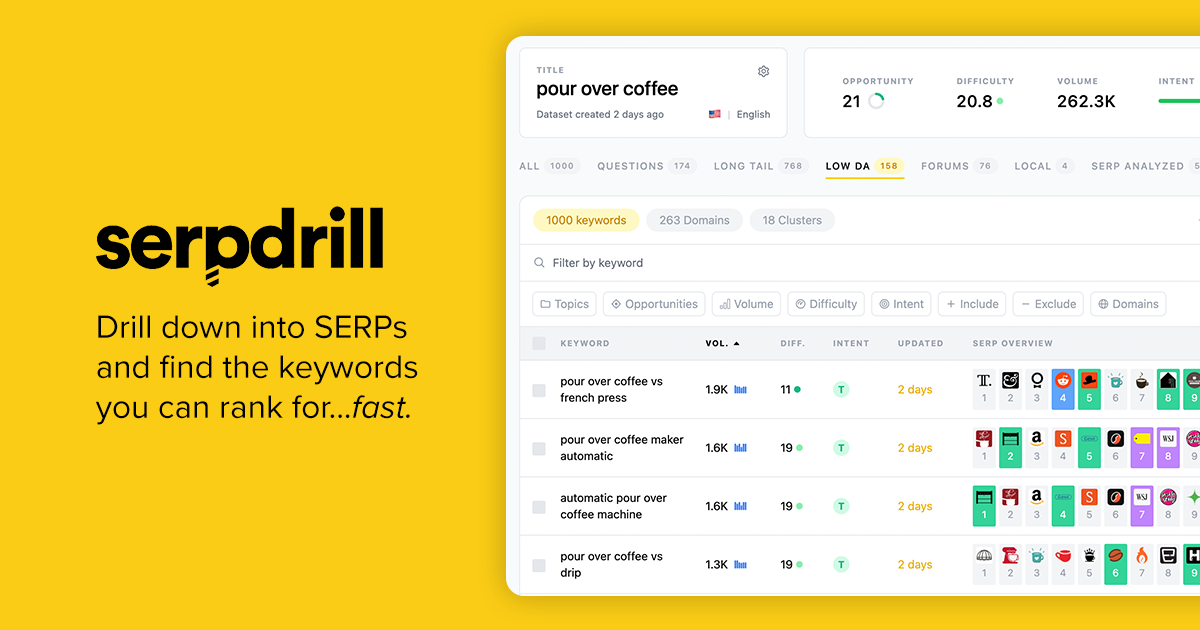
This overview brings together publicly available information about Serpdrill from its official website. Serpdrill is a keyword research and content-planning tool built around a specific methodology: rather than relying only on generic keyword difficulty scores, it analyzes live search results to identify weak spots — such as low-authority domains, thin content, forums, and certain file types — that a new or growing site may be able to outrank.

The Core Methodology
According to the site, the approach comes down to a simple formula: well-structured content plus weak SERP competition equals quicker rankings. Serpdrill's stated aim is to help DIY SEO practitioners and site owners find keywords where the current top-ranking pages have identifiable weaknesses, rather than guessing based on a single difficulty number.
How It Works
- Analyze live search results — after getting keyword suggestions, a user can analyze the live SERPs for each keyword directly inside the tool.
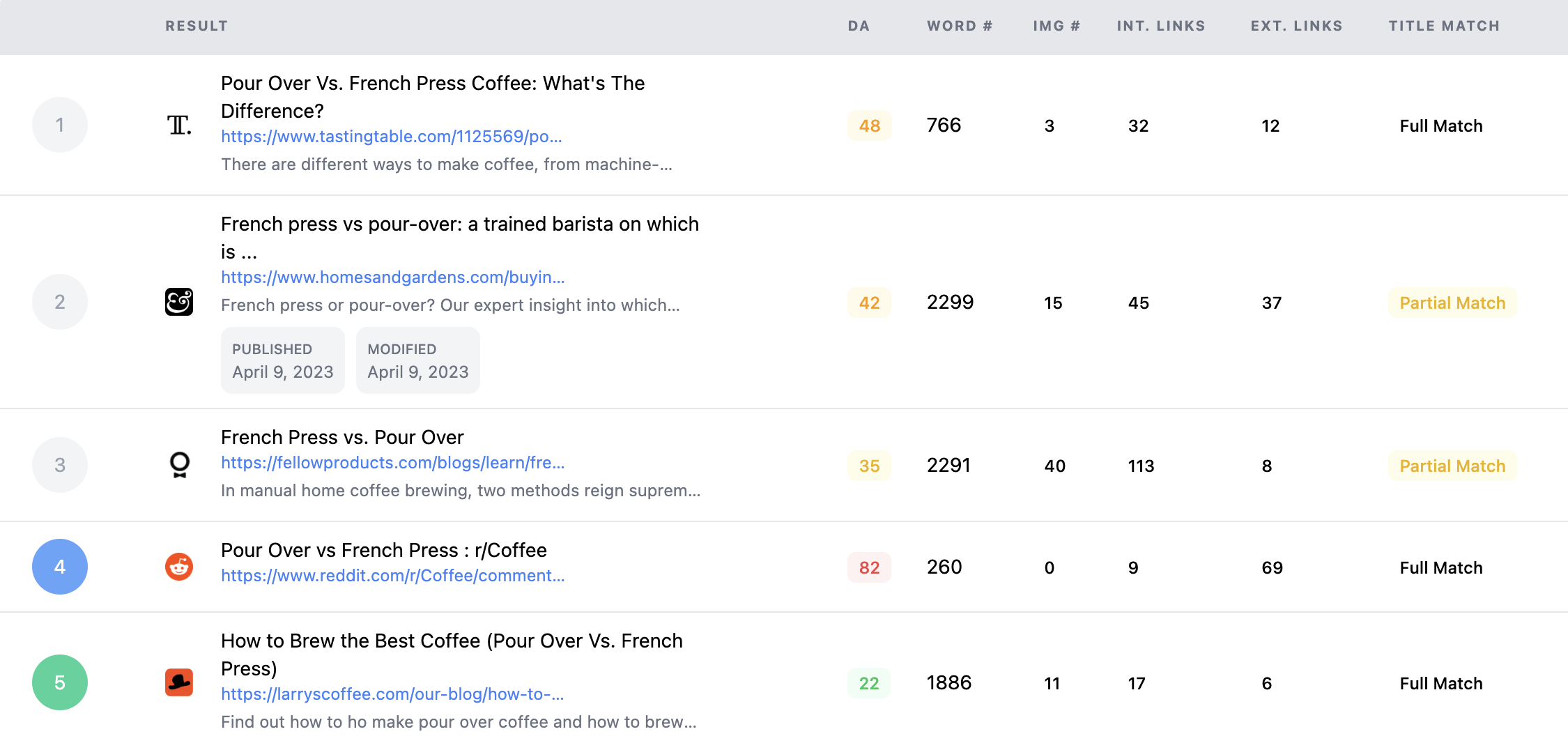
- Spot weak competition — Serpdrill scans the top results for a seed keyword and flags weak spots such as low-authority domains and thin content.
- Generate content and climb the ranks — once target keywords are identified, users can generate content intended to be better structured and more relevant than what is currently ranking.
Key Features
- Weak-spot detection — low-authority domains, thin content, specific file extensions, forums, and custom highlight rules.
- Wildcard searches — using an asterisk in a seed keyword to surface keyword patterns that match it.
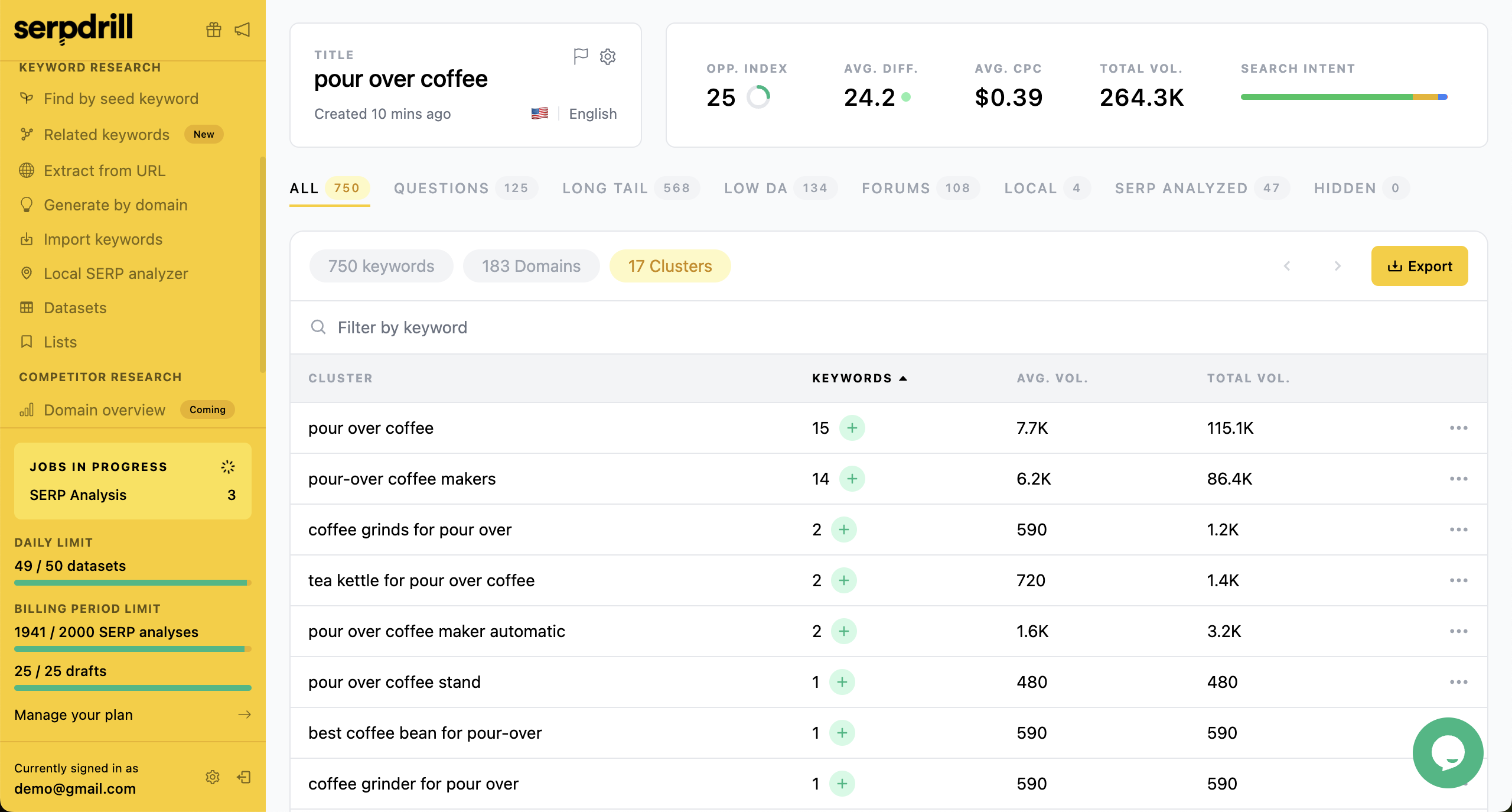
- Automatic keyword clustering — grouping keywords based on their analyzed SERP results to help identify patterns.
- Competitor domain research — a domains tab that shows keywords a competitor is already ranking for.
- AI content generation — the site states its AI model can generate 3,000-plus word posts in minutes.
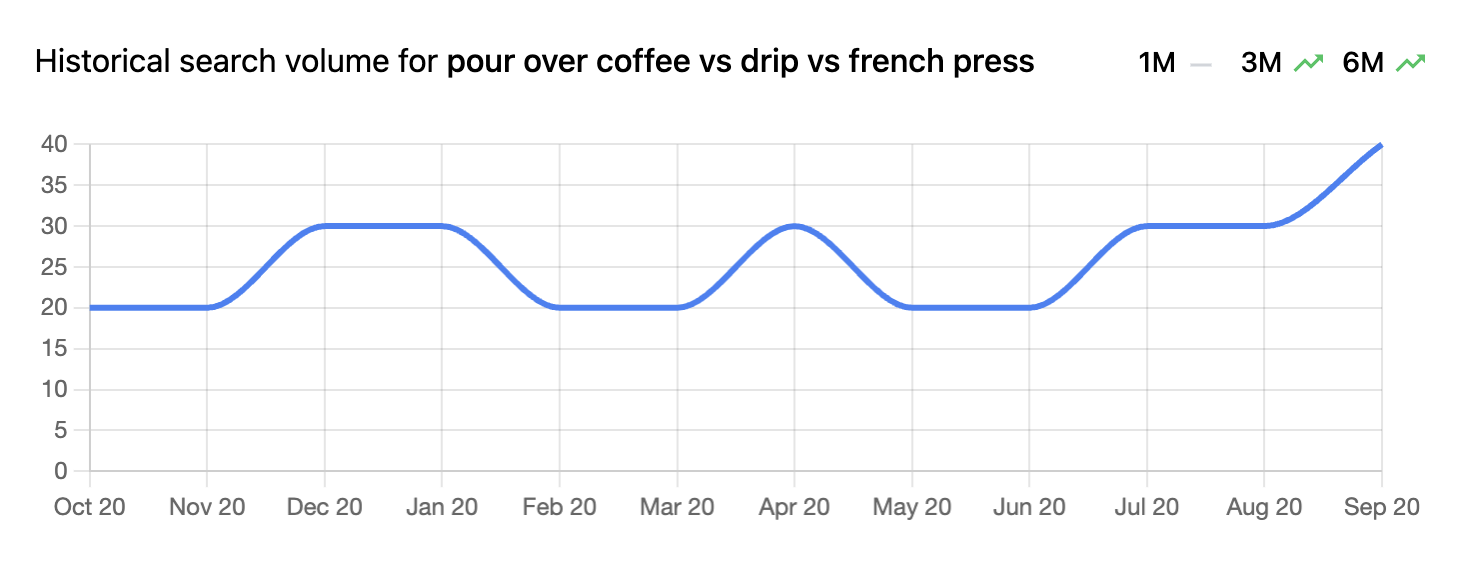
- Historical trend data — search volume history with monthly trend indicators to help spot growing topics.
Pricing
- Free — $0/month, including 15,000 keywords per month, 1 AI draft, 5 datasets per day, 100 keywords per dataset, 25 SERP analyses, and unlimited keyword clusters and lists.
- Lite — listed at $19/month (discounted to $15.20/month), with 112,500 keywords per month, 5 AI drafts per month, and higher dataset and SERP analysis limits, plus unlimited exports.
- Freelancer — listed at $29/month (discounted to $23.20/month), with 375,000 keywords per month, 10 AI drafts per month, and further increased limits, aimed at freelancers and niche site owners.
- Startup — listed at $59/month (discounted to $47.20/month), with 1.1 million keywords per month, 25 AI drafts per month, and the highest listed dataset and SERP analysis limits, aimed at startups and small businesses.
At the time of this overview, the site also displayed a limited-time offer of 20% off the first three months, plus two free months on annual billing.
Who This Is For
Based on the site's own framing, Serpdrill is aimed at solo bloggers, freelancers, and niche site owners doing their own SEO, as well as small businesses that want an affordable alternative to keyword tools that the site says commonly start around $100 per month. The company describes itself as a small, founder-led team based in Minneapolis.
Support and Documentation
The site provides an FAQ section covering general product questions, keyword research fundamentals, and platform-specific details such as supported search engines, countries, and languages, along with dedicated press and support contact addresses.
Summary
Serpdrill is a keyword research tool built around finding weak SERP competition rather than relying solely on difficulty scores, paired with AI-assisted content drafting, keyword clustering, and competitor keyword research. Its free plan offers a reasonable way to test the core weak-spot analysis before moving to a paid tier for higher usage limits.
#Serpdrill #SEO #KeywordResearch #ContentMarketing #DIYSEO #SEOTools